When a disc or nearby nerve is irritated, ordinary movements can become a negotiation. Sitting, standing, driving, or bending may all feel different. Spinal decompression is one non-surgical treatment Mayfield Chiropractic uses for selected disc and nerve-pressure patterns in Monroe and Shreveport, Louisiana.
It is not a generic stretch and it is not the right answer for every back or neck complaint. The starting point is a clinical evaluation that considers your symptoms, history, movement, and the structures most likely contributing to the problem. From there, Dr. Mayfield can explain whether spinal decompression belongs in your plan.
What spinal decompression is designed to do
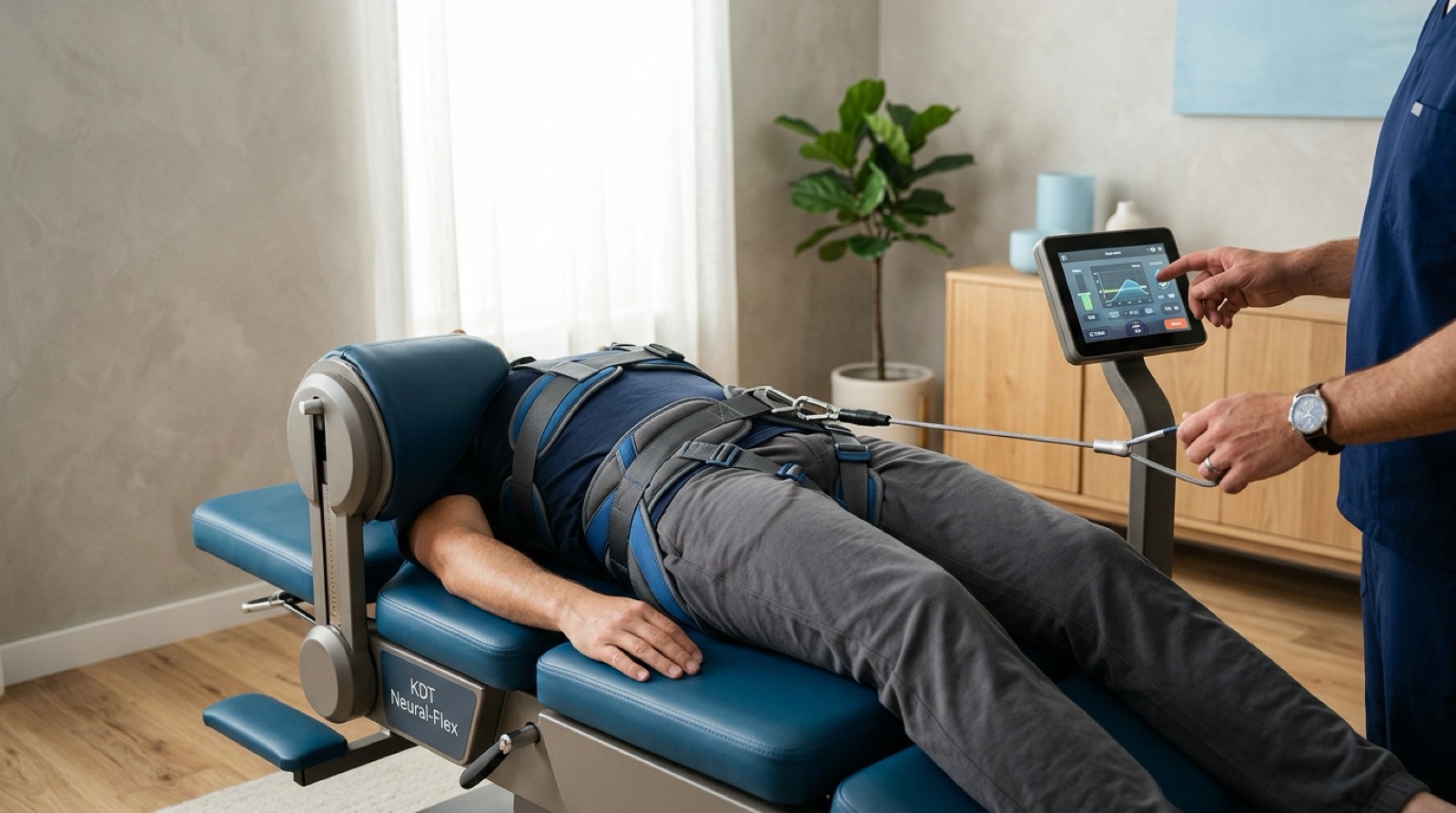
Spinal decompression uses a motorized traction table to apply a gentle, controlled stretch to the spine. The goal is to reduce pressure on spinal discs and nerves. The treatment can create negative pressure within a disc, which may help retract herniated or bulging material and promote the flow of nutrients and oxygen to the disc.
That description explains the mechanism, not a guaranteed result. Your response depends on the condition being treated, how long it has been present, and what the examination finds. A personalized plan matters more than the equipment by itself.
Which conditions may be considered
Mayfield Chiropractic commonly discusses spinal decompression for patients with herniated or bulging discs, degenerative disc disease, sciatica, spinal stenosis, or facet-syndrome patterns. It may also be considered for chronic back or neck pain that has not responded to other conservative care.
These labels describe different problems. Leg pain, numbness, or tingling can have more than one possible source, so the examination helps determine whether disc or nerve pressure is actually part of your presentation. If the findings point elsewhere, another treatment or a referral may be more appropriate.
What a session feels like
A spinal decompression session is typically 20 to 30 minutes. You will be positioned on the table while the device applies a controlled, gentle stretching pattern. Most patients describe the treatment as comfortable and relaxing, with a sensation of traction rather than a forceful adjustment.
Tell your provider what you are feeling during the session. Comfort, positioning, and the response of your symptoms all help guide the treatment. Spinal decompression should be part of an active conversation about how your body is responding, not something you have to tolerate silently.
How the care plan is structured
A typical protocol involves 15 to 30 sessions over 4 to 8 weeks, depending on your condition and response to treatment. Each person’s schedule is individualized. The purpose of a defined course is to give the team a way to reassess your progress rather than leaving care open-ended.
Spinal decompression may be combined with other conservative care and practical guidance when appropriate. The plan can change if your symptoms, movement, or functional goals change. If you are not progressing as expected, that is information to discuss at a reassessment.
When to schedule an evaluation
Consider an evaluation if back or neck pain is limiting work, driving, sleep, or daily movement; if symptoms travel into an arm or leg; or if you have been told you have a herniated or bulging disc and want to understand your non-surgical options. An evaluation can also clarify when spinal decompression is not the right fit.
Mayfield Chiropractic offers spinal decompression at both offices. The Monroe office is at 1400 Royal Avenue, Monroe, LA 71201. The Shreveport office is at 2219 Line Avenue, Shreveport, LA 71104. Call (318) 323-7246 for Monroe or (318) 828-1517 for Shreveport to discuss an evaluation.
Common questions
About this topic
What is spinal decompression therapy?
Spinal decompression is a non-surgical treatment that gently stretches the spine to relieve pressure on spinal discs and nerves. The treatment can create negative pressure within a disc, which may help retract herniated or bulging material and promote nutrient and oxygen flow to the disc.
What conditions may be treated with spinal decompression?
Mayfield commonly evaluates spinal decompression for herniated or bulging discs, degenerative disc disease, sciatica, spinal stenosis, facet syndrome, and selected chronic back or neck pain patterns that have not responded to other conservative care.
Is spinal decompression painful?
Spinal decompression is typically not painful. Most patients find it relaxing and feel a gentle stretching sensation during the treatment. Your provider will adjust positioning and the plan based on your response.
How many spinal decompression sessions will I need?
A typical protocol involves 15 to 30 sessions over 4 to 8 weeks, but the number depends on your condition and response to treatment. Dr. Mayfield creates a personalized plan and reassesses your progress.